|
FOR WEBSITE ONLY: Updated PHPCI Newsletter June 2025 ͏ ͏ ͏ ͏ ͏ ͏ ͏ ͏ ͏ ͏ ͏ ͏ ͏ ͏ ͏ ͏ ͏ ͏ ͏ ͏ ͏ ͏ ͏ ͏ ͏ ͏ ͏ ͏ ͏ ͏ ͏ ͏ ͏ ͏ ͏ ͏ ͏ ͏ ͏ ͏ ͏ ͏ ͏ ͏ ͏ ͏ ͏ ͏ ͏ ͏ ͏ ͏ ͏ ͏ ͏ ͏ ͏ ͏ ͏ ͏ ͏ ͏ ͏ ͏ ͏ ͏ ͏ ͏ ͏ ͏ ͏ ͏ ͏ ͏ ͏ ͏ ͏ ͏ ͏ ͏ ͏ ͏ ͏ ͏ ͏ ͏ ͏ ͏ ͏ ͏ ͏ ͏ ͏ ͏ ͏ ͏ ͏ ͏ ͏ ͏ ͏ ͏ ͏ ͏ ͏ ͏ ͏ ͏ ͏ ͏ ͏ ͏ ͏ ͏ ͏ ͏ ͏ ͏ ͏ ͏ ͏ ͏ ͏ ͏ ͏ ͏ ͏ ͏ ͏ ͏ ͏ ͏ ͏ ͏ ͏ ͏ ͏ ͏ ͏ ͏ ͏ ͏ ͏ ͏ ͏ ͏ ͏ ͏ ͏ ͏ ͏ ͏ ͏ ͏ ͏ ͏ ͏ ͏ ͏ ͏ ͏ ͏ ͏ ͏ ͏ ͏ ͏ ͏ ͏ ͏ ͏ ͏ ͏ ͏ ͏ ͏ ͏ ͏ ͏ ͏ ͏ ͏ ͏ ͏ ͏ ͏ ͏ ͏ ͏ ͏ ͏ ͏ ͏ ͏ ͏ ͏ ͏ ͏ ͏ ͏ ͏ ͏ ͏ ͏ ͏ ͏ ͏ ͏ ͏ ͏ ͏ ͏ ͏ ͏ ͏ ͏ ͏ ͏ ͏ ͏ ͏ ͏ ͏ ͏ ͏ ͏ ͏ ͏ ͏ ͏ ͏ ͏ ͏ ͏ ͏ ͏ ͏ ͏ ͏ ͏ ͏ ͏ ͏ ͏ ͏ ͏ ͏ ͏ ͏ ͏ ͏ ͏ ͏ ͏ ͏
|
____________________________________________________________ PHPCI Newsletter | Issue 11 | June 2025
|
___________________________PHPCI NEWS
|
FROM THE PRESIDENTPublic health palliative care (PHPC) is a global movement, as is evidenced by recent reviews showing the growth of compassionate communities worldwide. In the context of the globalisation of PHPC, I want to share with you some exciting new developments in recent months, all of which should be applauded and will be supported by PHPCI as they will help the further development of public health palliative care across the world. Some organisations in the German speaking part of Europe (Austria, Switzerland and Germany) have joined forces and have established an international collaborative on compassionate communities for that region. The city of Cologne in Germany and the city of Bern in Switzerland are already committed to the compassionate community city’s charter and similar initiatives have occurred in Austria. They intend to share expertise and knowledge, and will be developing local, regional and national strategies to promote compassionate communities in Austria, Switzerland and Germany. In March, I joined a delegation from Belgium to Cape Town, South Africa, where we visited a project on compassionate communities from the University of Cape Town (UCT). This visit was very interesting; they have a strong interdisciplinary team of people working on this project and I am optimistic for the successful development of two compassionate communities in some of the very poorest regions in the Western Cape. We had the chance to visit two health care centres in these two regions and met local community volunteers. Together with the Centre of Expertise on Compassionate Communities (COCO) of the VUB university in Brussels, PHPCI will be engaged in this project during its whole lifetime. While being in Cape Town, we also took the opportunity to visit the University of the Western Cape (UWC), the first black university under apartheid. We had a meeting with the Vice-Chancellor and the dean of the Faculty of Community and Health Sciences and promoted the concept of the Compassionate University; in the same week we also participated in an exciting seminar on compassionate communities at the school of public health of UWC. The Vice-Chancellor expressed his strong interest in UWC becoming a compassionate university, the first on the African continent. As he will be on an official visit to my VUB university Brussels next September, we will prepare for the signing of a formal Agreement to support UWC in becoming a Compassionate University and to collaborate in Compassionate Communities more widely. I have also recently received an official invitation from the African Palliative Care Association (APCA) to speak on behalf of PHPCI at a plenary of their 8th APCA conference 23-26 September 2025 in Botswana, Africa on “Compassionate communities in Palliative Care: bridging the gap”. The conference will be hosted by APCA and the Ministry of Health of Botswana and will also have a policy pre-conference workshop, including the 5th African Ministers of Health session on Palliative Care, which I have also be invited to address. I am fully convinced that our movement can benefit from collaborating with Africa, as we know that community approaches have traditionally been much stronger there than in Europe or North-America. Finally, I want to share with you also an important development within PHPCI. Some of the younger members have committed themselves to participating in the development of a PHPCI alumni association. It will be initiated with an invitation to all the fellows who participated in the PHPCI summer school in 2022 in Ghent, Belgium and in our PHPCI Academy in 2024 in Switzerland. The purpose of the alumni association is to create a worldwide network of young people committed to public health palliative care, and to supporting each other in their activities and career development. The future of PHPCI will be in the hands of this next generation of researchers and societal activists. The potential is there and we should facilitate this capacity-building; I am very happy with this new association and PHPCI will support its activities. As the summer months are approaching in the northern hemisphere, many of you will have your summer break. I wish you all a well-deserved rest period and hope you enjoy your holidays. All of my best wishes, Prof Luc Deliens
|
|
Prof Luc Deliens MA PhD President of Public Health Palliative Care International |
|

|
|
|
|
___________________________________________________________ PHPCI SURVEYPHPCI was established 10 years ago at the 2015 PHPCI conference in Bristol. As we plan for the future, we are working to define our priorities and create a strategic plan for the next 3–5 years. Our goal is to strengthen support for our members, foster growth, and increase our impact. We invite all current and past members, as well as anyone interested in Public Health Palliative Care, to share their thoughts by completing the below survey. Your feedback will help shape our direction. A summary of the responses will be shared on our website and in our next newsletter. Link to form here. ___________________________________________________________ Compassionate Community Endorsement WebinarSave the Dates – Upcoming Webinars Join us for a series of webinars to learn how to gain endorsement for your compassionate community. Each session will provide guidance, inspiration, and next steps. Zoom links will be shared soon. September 3rd | 8–9 AM (UK time)
November 12th | 12–1 PM (UK time)
February 26th | 6–7 PM (UK time)
|
___________________________Around the World
|
Strengthening Compassionate Communities in South AfricaFrom 24–26 March, the Compassionate Communities Centre of Expertise (COCO) of the Vrije Universiteit Brussel (VUB) visited Cape Town for a multistakeholder meeting with different departments of the University of Cape Town (UCT). The purpose was to explore collaborative projects aimed at strengthening compassionate communities’ initiatives across South Africa. The University of Cape Town (UCT) is leading a transformative initiative to reimagine palliative care through a community-based model. The initiative is piloted in the community ‘Heideveld’ by physician Dr Jennie Morgan. This five-year initiative, funded by VLIR-UOS, responds to the growing need for palliative care in South Africa by developing sustainable, compassionate support structures within local communities. It is a collaborative effort by UCT’s Chronic Diseases Initiative for Africa (CDIA), the Division of Interdisciplinary Palliative Care and Medicine (IPCM), and the Cancer Research Initiative, in partnership with Ghent University and VUB. Aligned with national and provincial palliative care policies, the project also works closely with the Western Cape Palliative Care Task Team. The VLIR project focuses on improving care for people living with advanced illness in low-income settings by fostering community-led support and enhancing collaboration between primary and specialist healthcare services. By embedding palliative care training into undergraduate and postgraduate medical education, the project is helping to bridge the gap between policy and practice, ensuring that a better-trained workforce can strengthen palliative care delivery in under-resourced communities. The multistakeholder meeting featured keynote presentations on the current state of palliative care in South Africa and Belgium, along with site visits and engagement with key stakeholders, such as PALPRAC and the African Palliative Care Association (APCA). This exchange not only deepened mutual understanding, but also laid the groundwork for long-term collaboration rooted in shared values of compassion, equity, and community empowerment. ___________________________________________________________
|
2nd International Death Literacies Symposium in BrusselsOn 17–18 March 2025, the International Network on Death Literacies gathered for the 2nd International Death Literacies Symposium—a vibrant space for connection, learning, and shared inspiration. Following the inaugural symposium held on 25 June 2024 at UCL in London (UK), this year’s event brought together 45 participants from 8 countries to explore the themes of death, grief, and end-of-life health literacy in both research and practice. Emerging scholars shared their work and received valuable feedback from experienced professionals across the field. Stay tuned for updates on the next gathering in 2026!
|
|
___________________________________________________________ Why Palliative Care Matters? A Public Campaign in LebanonPalliative care in Lebanon has made steady progress since 2010, marked by a series of key milestones achieved through the collaboration of multiple stakeholders. The most recent and notable advancement came in 2023, when the Lebanese Ministry of Public Health launched a five-year National Cancer Plan that includes a dedicated chapter on palliative and supportive care. This chapter outlines a range of recommendations and actionable steps aimed at increasing public awareness and understanding of palliative care across the country. In line with these recommendations, a national public awareness campaign has been launched this year under the umbrella of the Ministry of Public Health. This initiative is led by two main home-based palliative care organizations in the country, SANAD-The Home Hospice Organization of Lebanon and Balsam-The Lebanese Center for Palliative Care. The campaign was preceded by a formative survey to better assess the public’s knowledge and attitudes toward palliative care, ensuring community engagement in informing the design of campaign messaging. The campaign theme “Why palliative care matters” aims at mainstreaming the concept and principles of palliative care, debunking common misconceptions embedded in our culture and highlighting available palliative care services. The campaign targets communities and healthcare professionals in different areas across Lebanon. To date, six interactive awareness sessions have been held engaging diverse audiences including community members and healthcare professionals from different backgrounds who attended and shared their thoughts, stories and inquiries about palliative care. Interactions and feedback throughout sessions highlight a positive attitude and acceptance of palliative care and the immense need for such services. Future steps will include conducting further sessions targeting new geographical areas to further promote equitable access to information about palliative care in Lebanon.
|
|
_________________________________________________________________
|
Fellowship in Compassionate Spaces in IndiaLaunched in mid-May 2025, the Fellowship in Compassionate Spaces is a groundbreaking learning initiative at the intersection of compassion, design, and end-of-life care. Organized by the Institute of Palliative Medicine in collaboration with the Indian Institute of Architects (Kerala Chapter), this six-month online fellowship program brings together a diverse group of professionals and thought leaders to reimagine how physical and emotional environments can be designed to foster dignity, compassion, and well-being. With themes including spatial justice, healing environments, and human-centered design, the fellowship offers a truly transformative experience. It marks a bold step toward cultivating compassionate communities through interdisciplinary exploration and collaboration. Learn more about the Fellowship in Compassionate Spaces.
|
|
___________________________________________________________ Second Congress on Human Care and Compassion Held in MedellínIn March 2025, Medellín, Colombia hosted the Second Congress on Human Care and Compassion, convened by Universidad Pontificia Bolivariana as part of its “Compassionate Network: Social Transformation towards Care.” The three-day event brought together over 625 participants and nearly 50 speakers from diverse sectors to explore care as a central pillar of human connection. Sessions addressed caregiving from philosophical, economic, health, governmental, business, and community perspectives. A full day honored caregivers with practical tools and support. The congress reinforced the role of compassion in building resilient, empathetic communities. The third congress is planned for October 2026, with a focus on care communities and evolving care systems in Colombia.
|
______________________________________________4th International Research Seminar on Public Health and Palliative CareThe 4th International Research Seminar on Public Health and Palliative took place from June 17–19, 2025, in Victoria, Canada. Hosted by the Institute on Aging and Lifelong Health at the University of Victoria, in collaboration with the EAPC Reference Group on Public Health & Palliative Care and McMaster University, the seminar explored the theme Innovating Care: Research and Action for Public Health and Palliative Care. This theme is especially timely in light of WHO resolution WHA67.19 (2014), which calls on member states to integrate palliative care into national healthcare systems, with a focus on underserved populations and equitable access. Look for highlights and insights from this important gathering in the next PHPCI newsletter. For more information about the seminar, you can click here. ___________________________________________________________
|
NCD Hard Talks WebinarEnjoy this recording of the NCD Hard Talks Webinar: "Unheard, unseen, under-served: Placing lived experiences at the heart of palliative care reform" The conversation focused on how to meaningfully involve individuals with lived experience in palliative care reform—ensuring their voices shape the process, identifying gaps in meeting their needs, and informing the development of people-centered palliative care policies.
|
|
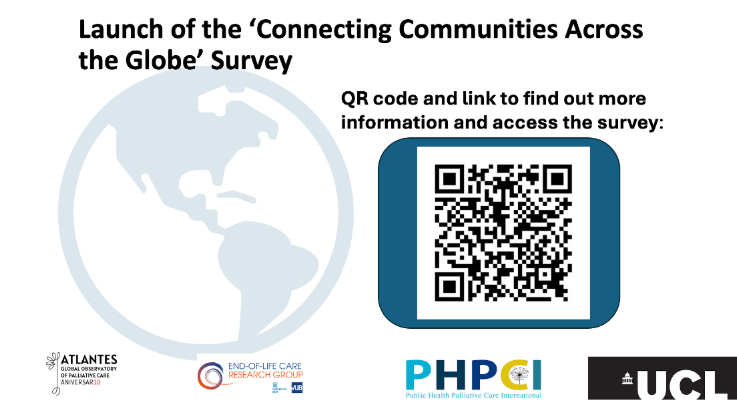
___________________________________________________________ Launching the ‘Connecting Communities Across the Globe’ Survey
|
Primary palliative care is a public health priority – essential to reduce unnecessary suffering. Compassionate Communities (CoCos) can play a vital role by fostering community-led responses to dying, death, and grief. Despite their global growth, CoCos are often underrepresented in national and international palliative care strategies and academic literature. This survey aims to deepen our understanding of compassionate communities across the globe and create opportunities to connect, learn, and be inspired by one another. We’re looking for anyone involved in community programs that support people through illness, caregiving, dying, and grief. A community program is any organized effort within a community that helps people with experiences of illness, caregiving, death, dying, and grief. These programs can take many forms, such as support groups, awareness campaigns, or educational programs.
If you’re involved in or have experience with a program like this- please take 10 minutes to complete the survey. Participation is anonymous and voluntary and you can translate the survey into your preferred language. For more information click on the survey link here.
|
|
___________________________________________________________ Notable Honours
|
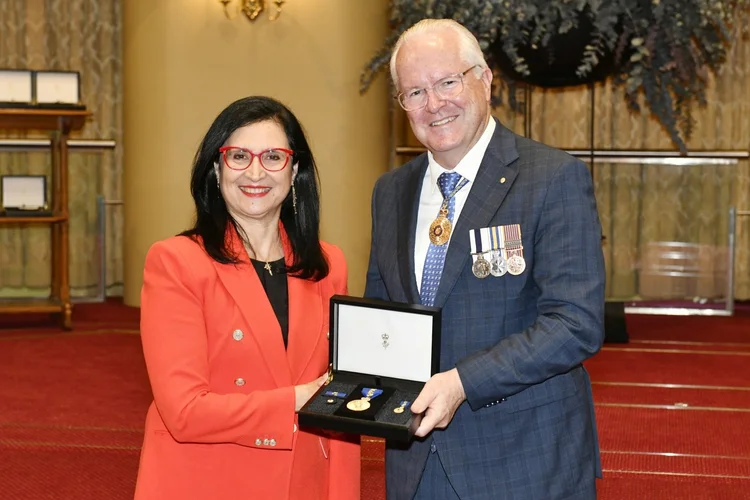
Prof. Samar Aoun HonoredCongratulations to Professor Samar Aoun on being honored for the Member of the Order of Australia (AM) Award due to her outstanding contributions. The verbal citation read at the medal presentation at the Government House was: “The 2023 WA Australian of the Year, Professor Aoun is an international leader in end-of-life and bereavement care research, especially for motor neurone disease. She has shaped policies and practices through community-driven support models and led translational research, championing the practice of Compassionate Communities. Through her advocacy and leadership, Professor Aoun continues to drive systems change for better public health palliative care for the community.” Congratulations on this prestigious award! You can find out more about Dr. Aoun’s work here and here. ___________________________________________________________
|
Professor Allan Kellehear Awarded OBE for Services to Palliative Care in King’s Birthday HonoursCompassionate Communities UK proudly congratulates co-founder Professor Allan Kellehear on receiving an OBE for his exceptional contributions to palliative care. A global leader in the public health approach to end-of-life care, Professor Kellehear’s vision has transformed local initiatives into an international movement—shaping policies, communities, and care practices worldwide. This honour comes at a critical time as conversations around equity, access, and assisted dying gain urgency. His work reminds us that most care happens in our communities, not in hospitals—and that compassionate, community-led support is vital for dignified, holistic care at life’s end.
|
|
___________________________________________________________ Upcoming Events & Opportunities
|
You Think You Know About End of Life? Think Again!We are excited to promote this programme again - exclusive access to a series of video lectures by Professor Allan Kellehear, followed by an online session with the man himself! This lecture series is engaging, challenging & amusing! Members of CCUK get a 20% discount. The online session is on 18.09.25 and all information and all information is on the Eventbrite page. For more information about the series, you can click here. ___________________________________________________________
|
|
Registration and abstract submissions are now open for the upcoming four-day program focused on assisted dying and its intersection with broader end-of-life issues. We welcome presentations sharing empirical, ethical, legal and clinical perspectives on assisted dying and its intersection with other end of life issues. For full details on how to register or submit your abstract, visit the website here. __________________________________________SAVE THE DATE!We are excited to announce that the 9th annual Public Health Palliative Care International Conference will take place in Taiwan from October 6-8, 2026. Stay tuned for more details.
|
|
___________________________________________________________ PHPC Tools and Resources Updates
|
Launch of a ‘How-to Guide’ for the development of Compassionate SchoolsCompassionate Schools recognise serious illness, caregiving, death, loss and grief are inherent aspects of life in schools. They develop activities aimed at changing attitudes and increasing knowledge and skills of both students and staff, so that they are better equipped to support themselves and each other during such times. Developed by the European Learning Network on Compassionate Schools, this ‘How-to guide’ is aimed at anyone interested in, or keen to develop, Compassionate Schools. It provides advice and activities, including some helpful tips for getting started. The guide is currently available in English, Spanish, Italian, Greek , Canadian French, Belgian French and German. For further information please contact sally.paul@strath.ac.uk or bert.quintiens@vub.be
|
|
___________________________________________________________ Recent Publications
|
|
A Special Collection on Death Literacy in the Journal of Palliative Care and Social Practice. Open for submissions till October 20, 2025. Over the past decade, death literacy has emerged as a critical concept in understanding how individuals and communities engage with death, dying, and bereavement. Now recognized and studied globally, death literacy highlights the skills, knowledge, and networks people use to navigate end-of-life experiences. This Special Collection aims to highlight some of the important and groundbreaking work currently being done by scholars across the world including showcasing innovative research, addressing equity and inclusion issues and prompting community-led initiatives. https://journals.sagepub.com/topic/collections-pcr/pcr-death_literacy/pcr D’Eer, L., Chambaere, K., Van den Block, L., Dury, S., Sallnow, L., Deliens, L., Cohen, J., & Smets, T. (2024). Citizens with a caregiving experience in the past year are more likely to participate in neighbourhood activities regarding serious illness, death or loss: A cross-sectional survey study. Mortality, 1–17. https://doi.org/10.1080/13576275.2024.2441176 Johansson, T., D’Eer, L., Eneslätt, M., Kleijberg, M., Quintiens, B., Sallnow, L., & Paul, S. (2024). New public health approaches to end‑of‑life care. In R. D. MacLeod & L. Van den Block (Eds.), Textbook of Palliative Care (2nd ed., pp. 1–15). Springer, Cham. https://doi.org/10.1007/978-3-319-31738-0_97-2 Quintiens, B., Smets, T., Chambaere, K., Van den Block, L., Deliens, L., & Cohen, J. (2024, May 9). Willingness to support neighbours practically or emotionally: A cross‑sectional survey among the general public. Palliative Care and Social Practice, 18, Article 26323524241249196. https://doi.org/10.1177/26323524241249196 De Donder, L., Stegen, H., & Hoens, S. (2024). Caring neighbourhoods in Belgium: lessons learned on the development, implementation and evaluation of 35 caring neighbourhood projects. Palliative Care and Social Practice, 18(1), 1–14. https://doi.org/10.1177/26323524241246533 Vanderstichelen, S., De Moortel, D., Nielsen, K., Wegleitner, K., Eneslätt, M., Sardiello, T., Martos, D., Webster, J., Nikandrou, I., Delvaux, E., Tishelman, C., & Cohen, J. (2024). Developing and evaluating Compassionate Workplace Programs to promote health and wellbeing around serious illness, dying and loss in the workplace (EU‑CoWork): A transdisciplinary, cross‑national research project. Palliative Care and Social Practice, 18, 1–15. https://doi.org/10.1177/26323524241281070
|
|
___________________________________________________________ From PHPCI Council
|
|
On behalf of the PHPCI council, we extend good wishes for the coming months, and we look forward to working in partnership with you over the year ahead. Full members President - Prof Luc Deliens (Belgium) Vice President - Dr Kerrie Noonan (Australia) General Secretary - Dr Bert Quintiens (Belgium) Treasurer - Dr Emma Hodges (UK) Membership Secretary - Saif Mohammed (India) General Member - Elizabeth Johnson (USA) General Member - Dr Esther Nafula (Kenya) General Member - Dr Max Kleijbergy (Sweden) General Member - Farah Demachkieh (Lebanon) General Member - Associate Professor Jason Mills (Australia) General Member - Dr. Louise D’Eer (Belgium) General Member - Prof Samar Aoun (Australia) General Member - Dr Tania Pastrana (Columbia / Germany)
Co-opted Ex officio members Journal Representative - A/Prof Libby Sallnow EAPC PHPC Representative - Dr Steven Vanderstichelen IAHPC Representative - Dr Natalie Greaves WHPCA Representative - Dr Stephen Connor Conference Representative - Prof Yingwei Wang (Taiwan)
_________________________________________________________________ Social mediaFor questions and inquiries please visit our PHPCI website, by clicking here. For Facebook - click here For Bluesky - click here For Linkedin - click here _________________________________________________________________ Would you like to contribute to the PHPCI Newsletter?We would love to hear about your Public Health Palliative Care Project! Please send your experiences, stories, events or resources to be included in forthcoming Newsletters to Elizabeth Johnson at elizabeth@thepeacefulpresenceproject.org We are also looking for regional partners to act as co-editors in assisting us in identifying and sourcing stories of public health palliative care initiatives that can be shared and celebrated in this newsletter. If you would like to take on this role, please get in touch with Elizabeth Johnson, using the email address above. _______________________________________________________________ Editorial TeamElizabeth Johnson, Farah Demachkieh and Dr. Louise D’Eer thank the PHPCI Council for assistance with the development of this newsletter. Thank you also to all article contributors for sharing your resources, ideas and practice examples. _________________________________________________________________
|
|
|
|