|
PHPCI Newsletter June 2026 ͏ ͏ ͏ ͏ ͏ ͏ ͏ ͏ ͏ ͏ ͏ ͏ ͏ ͏ ͏ ͏ ͏ ͏ ͏ ͏ ͏ ͏ ͏ ͏ ͏ ͏ ͏ ͏ ͏ ͏ ͏ ͏ ͏ ͏ ͏ ͏ ͏ ͏ ͏ ͏ ͏ ͏ ͏ ͏ ͏ ͏ ͏ ͏ ͏ ͏ ͏ ͏ ͏ ͏ ͏ ͏ ͏ ͏ ͏ ͏ ͏ ͏ ͏ ͏ ͏ ͏ ͏ ͏ ͏ ͏ ͏ ͏ ͏ ͏ ͏ ͏ ͏ ͏ ͏ ͏ ͏ ͏ ͏ ͏ ͏ ͏ ͏ ͏ ͏ ͏ ͏ ͏ ͏ ͏ ͏ ͏ ͏ ͏ ͏ ͏ ͏ ͏ ͏ ͏ ͏ ͏ ͏ ͏ ͏ ͏ ͏ ͏ ͏ ͏ ͏ ͏ ͏ ͏ ͏ ͏ ͏ ͏ ͏ ͏ ͏ ͏ ͏ ͏ ͏ ͏ ͏ ͏ ͏ ͏ ͏ ͏ ͏ ͏ ͏ ͏ ͏ ͏ ͏ ͏ ͏ ͏ ͏ ͏ ͏ ͏ ͏ ͏ ͏ ͏ ͏ ͏ ͏ ͏ ͏ ͏ ͏ ͏ ͏ ͏ ͏ ͏ ͏ ͏ ͏ ͏ ͏ ͏ ͏ ͏ ͏ ͏ ͏ ͏ ͏ ͏ ͏ ͏ ͏ ͏ ͏ ͏ ͏ ͏ ͏ ͏ ͏ ͏ ͏ ͏ ͏ ͏ ͏ ͏ ͏ ͏ ͏ ͏ ͏ ͏ ͏ ͏ ͏ ͏ ͏ ͏ ͏ ͏ ͏ ͏ ͏ ͏ ͏ ͏ ͏ ͏ ͏ ͏ ͏ ͏ ͏ ͏ ͏ ͏ ͏ ͏ ͏ ͏ ͏ ͏ ͏ ͏ ͏ ͏ ͏ ͏ ͏ ͏ ͏ ͏ ͏ ͏ ͏ ͏ ͏ ͏ ͏ ͏ ͏ ͏ ͏
|
____________________________________________________________ PHPCI Newsletter | Issue 13 | June 2026
|
___________________________PHPCI NEWS
|
FROM THE PRESIDENT For many years, many trials in palliative care have shown limited evidence of effectiveness. Studies on Advance Care Planning (ACP), for example, demonstrate this very clearly. Many ACP trials — ever since the Detering trial in Australia — have not shown significant effectiveness. The problem is not that the concept of ACP is invalid, or that the interventions developed are poorly designed. The problem is that for the past 20 years we have focused on only one side of the coin: the professional side, the service-delivery side. As you all know, ACP is fundamentally a communication tool. The other side of that coin is not the health professional, but the person living within multiple social groups and communities — shaped, educated, and supported in matters of death, dying, and loss by parents, siblings, friends, teachers, and by participation in society and diverse sociocultural groups. However, most ACP interventions focus solely on health services, often involving only one or a few healthcare professionals. ACP is failing because we have neglected to involve the social groups surrounding people with serious illness and their carers: the social environments and wider society. That wider society also needs to be educated, using health-promotion approaches, to speak openly about death and dying from a young age onwards. This education should therefore begin in primary and secondary schools, but also extend to workplaces, community organisations, and businesses. Talking about death and dying should become a normal part of life rather than an exception or taboo. One of the values of Public Health Palliative Care is that it is bridging the gap between professional palliative care services and the many social environments in the wider society. It does so by engaging communities, carers, volunteers, schools, workplaces, religious institutions, community organisations, healthcare institutions, and universities. Compassionate communities are generating societal solutions to many of the challenges related to serious illness, dying, caregiving, and loss. There is growing evidence supporting public health palliative care, alongside a rapid global uptake of compassionate communities. These developments are highly encouraging. Compassionate communities are now emerging in many different forms, varying in size, context, and activities. Within my own research team, the End-of-Life Care Research Group at VUB University in Brussels, we are working with a wide diversity of compassionate community initiatives: compassionate neighbourhoods, compassionate cities, compassionate schools, compassionate workplaces, compassionate townships in Cape Town, South Africa, and compassionate universities in both Belgium and Cape Town. The diversity of compassionate communities is well illustrated in the recently published book Compassionate Communities in Action: Global Stories of Care, Loss and Connection, edited by Emma Hodges and Manjula Patel. The book brings together practical examples of compassionate cities and communities from around the world. Together, these examples provide a practical roadmap, highlighting both successes and challenges, alongside reflections from the communities involved. Over the past 20 years, hundreds of regions globally have worked to develop compassionate cities and communities in order to improve experiences of death, dying, loss, and caregiving for their residents. This book is designed both for those beginning their journey and for those seeking to further develop existing initiatives. As President of PHPCI, I am very pleased to see public health palliative care developing so significantly across the world. It is encouraging that compassionate communities and public health palliative care are increasingly being integrated into policies across all continents, accompanied by growing promotion and real-world implementation through a wide variety of compassionate community initiatives. Some countries may use different terminology — such as “Caring Communities” — but this is less important than preserving the underlying paradigm: that death, dying, and loss are social experiences with a medical component, rather than medical experiences with a social component. On behalf of the PHPCI Council, I wish you all a wonderful summer and holiday period, and we hope to see many of you at the 9th Public Health Palliative Care International Conference, taking place at the Fullon Hotel Tamsui Fisherman’s Wharf, New Taipei City, Taiwan, October 6-9, 2026. All of my best wishes, Prof Luc Deliens MA PhD. President of Public Health Palliative Care International
|
|
___________________________________________________________ PHPCI Taipei Conference in October 2026Registration is now open for the 9th Public Health Palliative Care International Conference in Taipei City, Taiwan:
Link to this page: https://www.phpci2026.tw/site/page.aspx?pid=901&sid=1674&lang=en Please note that the abstract submission deadline has been extended to June 15, 2026. Information regarding the 2026 PHPCI Awards, including nomination guidelines and submission details, will be available via the PHPCI and conference websites. Application information coming soon. The deadline for award nominations is September 1, 2026 (11:59 PM CET).
|
|
___________________________________________________________ PHPCI Compassionate Community and City EndorsementPHPCI is pleased to recognize the growing number of communities and cities around the world that have received Compassionate Community and Compassionate City endorsement as of May 2026. These initiatives reflect a shared commitment to strengthening community responses to serious illness, caregiving, death, dying, and grief through public health and community development approaches. The current list of endorsed communities and cities includes: Oasis of Hope, Kericho County, Kenya Southwest Compassionate Communities Network, Australia Getxo, Basque Region of Spain Singapore (the capital) Turin, Italy Lodi, Italy East Suffolk, UK Brereton Village, Staffordshire, UK Birmingham City, UK Colchester City, UK Whittington and Fisherwick Village, Staffordshire, UK Tamworth, Staffordshire, UK
These endorsements highlight the expanding international movement to build compassionate cultures of care and community participation. PHPCI warmly congratulates all endorsed communities and looks forward to supporting continued collaboration and learning across the global network. For more information about the endorsement program and application process, visit PHPCI Compassionate Communities and Cities Endorsement
|
___________________________Around the World
|
Costa Rica, Compassionate CountryCosta Rica, Compassionate Country.
By Fundación Partir con Dignidad and COOPENAE-WINK Costa Rica With You (“Con Vos,” using the familiar form vos, common in Costa Rica Spanish), a Compassionate Country, was born from a gathering of kind, determined, and compassionate people who chose to join the movement of Compassionate Communities. Their shared intention was to inspire society to come together and build networks of care around those living with advanced illness and those at the end of life—so that, even in one of life’s most vulnerable moments, dignity, comfort, and well-being could be held and protected. The first Compassionate Cities in Costa Rica began through the vision and commitment of Fundación Partir con Dignidad and Coopenae–Wink. The strong leadership and heartfelt drive of these organizations, and of the people within them, became one of the essential forces that made this beginning possible. Guided by New Health Foundation and its approach to developing Compassionate Communities, the foundations were carefully and thoughtfully laid, allowing this model to grow and extend across the entire country. By 2026, the project reached a significant milestone: nine Compassionate Cities, one Compassionate Province, and an initiative steadily moving toward becoming a Compassionate Country. Today, nine municipalities are actively leading local governance and territorial coordination in the cities of Cartago, Jiménez, Oreamuno, Paraíso, Turrialba, Alvarado, Curridabat, San Rafael, and Upala. This progress has been made possible thanks to a strong and well-articulated governance structure, as well as the committed involvement of the Ministry of Health and Santa Paula University. In addition, more than 50 key stakeholders have expanded the project´s territorial reach and strengthened its operational capacity, consolidating a collaborative, interinstitutional network that continues to sustain its growth. Over the years, more than 4,000 people have taken part in awareness-raising and capacity-building initiatives. At the same time, around thirty community-based actions have helped strengthen local dynamics, supporting the definition of strategic priorities and lines of action in each city. Close coordination among local palliative care teams, community intervention committees, community organizations, volunteers, community promoters, and the university has been essential. Through this shared effort, around 70 families have benefited, and continue to benefit, from community-based interventions designed to build meaningful networks of care. These networks aim to provide comprehensive, person-centered responses that honor the needs and preferences of individuals living with advanced illness and those at the end of life, fostering care that is more humane, closer, and deeply dignified. Throughout 2026, we will continue nurturing this work and inviting more cities to join—so that, together, we may help Costa Rica become the world’s first Compassionate Country.
|
_____________________________________________A Compassionate University in Bogotá, Colombia: Juan N. Corpas UniversityBy Luz Marina Cano M. MD. MsC. Ph.D. PD A “Compassionate University” is an organization committed to fostering and integrating compassion among students and health professionals, with the aim of creating more humane, dignified, and compassionate healthcare systems. The Juan N. Corpas University in Bogotá, Colombia, has launched a “Compassionate University” project based on its own methodology for the development of Compassionate Communities (the All with you® method). This approach is also being applied within the university context, with the main objective of building an institution recognized for its culture of empathy, compassion, and care for individuals facing difficult situations both within and beyond the organization. The project is initially based on the following objectives: -To develop awareness-raising and dissemination activities on the importance of caring and providing support. -To provide tools that enable citizens to know how to care for and accompany individuals in need, including events, seminars, public engagement activities, and workshops for professionals and families. -To create spaces for exchange where experiences can be shared, thereby fostering the development of “caring communities”. -To promote quality strategies in service delivery by advancing the integration of healthcare and social care systems, and encouraging citizen involvement in their own health. -To improve palliative care in the final stages of life, optimising both social and healthcare systems as well as family environments. -To raise societal awareness regarding palliative care. The initiative also seeks to promote the development of community-based networks within the university to support individuals experiencing advanced illness and/or end-of-life situations, both inside and beyond the academic environment. At the Fundación Universitaria Juan N. Corpas, this commitment is embodied through the Compassionate University model, a cross-cutting institutional initiative supported by 33 compassion ambassadors among faculty and administrative staff, whose actions and processes impact all organizational units of the institution. This strategy permeates the academic curriculum and articulates comprehensive work among Student Wellbeing, Human Resources, Legal Affairs, and Academic Deanships, strengthening an institutional culture based on care, empathy, and respect. Likewise, this model is developed within the framework of the “Corpas por el Respeto” Program, the institutional initiative responsible for leading the care pathway for victims of violence, mental health support, and the implementation of protocols for addressing Gender-Based Violence (GBV) in accordance with Colombian regulations applicable to Higher Education Institutions and workplace environments.
|
|
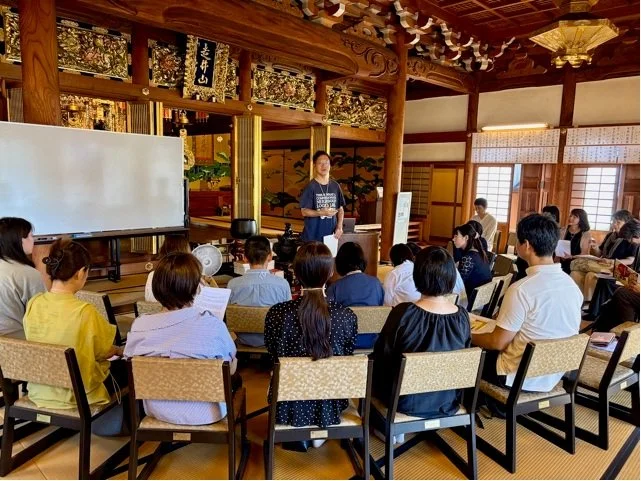
___________________________________________________________ Growing Movement of Compassionate Communities in JapanBy Hirobumi Takenouchi. Founder and Representative Director, Compassionate Communities Japan. Professor of Philosophy and Death Studies, Shizuoka University In recent years, the movement of Compassionate Communities has been gaining momentum and full-fledged activities are about to start in Japan. The Japanese edition of Allan Kellehear’s Compassionate Cities, Public Health and End-of-Life Care (2005) was published in 2022, under the supervision of Prof. Hirobumi Takenouchi and Prof. Satoko Hotta. This book includes the Japanese translation of the Compassionate City Charter, which is also posted on the website of Compassionate Communities Japan (https://cc-jp.net/ ). In 2023, the Japanese Society for Hospice and Home Care organised an annual conference and invited Professor Kellehear to be the keynote speaker. Monthly online meetings (CC liaison meetings) started the following month. Then, after a year of preparation, Prof. Takenouchi organised the unincorporated association “Compassion and Dialogue” with 15 other members in January 2025, which transitioned to a general incorporated association “Compassionate Communities Japan” in February 2026. In 2026, Compassionate Communities Japan will deliver three different Compassionate Communities courses (introductory, practice-based, and inquiry-based), as well as dialogical cafes on loss and death, summer school for dialogue and facilitation, and Compassionate Communities Annual Festival (COCO Festival) on a trial basis. Through these programmes, Compassionate Community Organisers (COCOO) will be trained and then deployed across the country as leaders in the support and coordination of a wide range of compassionate communities. In Japan, compassionate communities are now emerging, centered on home-based palliative care and led both by local authorities and Buddhist temples. To support the nationwide Compassionate Communities movement, Professor Kellehear, in collaboration with the Tokyo Metropolitan Hospital Organization, will begin a Visiting Professor appointment at Shizuoka University on 1 June.
|
|
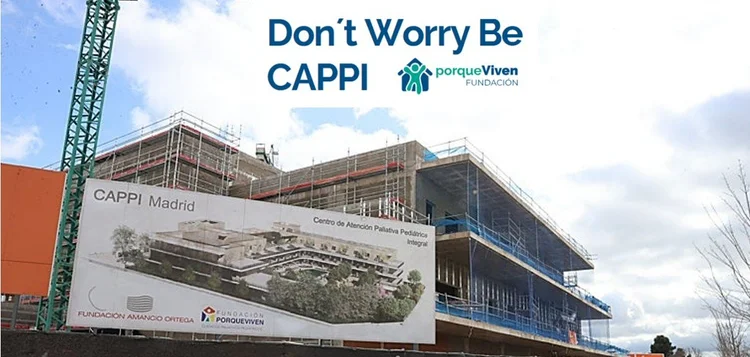
___________________________________________________________ Welcome to the most Beautiful Project in the World: CAPPIBy Fundación porqueViven The first Centre for Advanced Paediatric Palliative Care, CAPPI is founded on an innovative, integrated, community-based model in Madrid, Spain. It is a place of care and respite, created by Fundación porqueViven and designed to help children and their families live life to the fullest, where every moment holds deeper meaning. It is a pioneering space in Spain, created to provide comprehensive care for children living with life-threatening illnesses, as well as for their families. With more than 15,000 square metres, CAPPI has been designed as an integrated, community-based model – a “third space” between hospital and home – where children, parents, siblings, professionals, families, neighbours, school friends, and volunteers can come together. It is a place where life is shared, with a variety of activities and environments dedicated to well-being, allowing each child to be cared for holistically by integrating physical care, psychosocial and emotional support, education, and spiritual care within the family context. CAPPI is being built in Madrid on public land that has been granted by the Madrid City Council. Construction for the Center is 100% funded by Fundación Amancio Ortega and will include 54 family respite beds for short-term stays, 24 day-care places for children with high support needs, and a comprehensive therapy centre offering physiotherapy, occupational, speech, music therapy, and hydrotherapy. It also provides spaces for learning and social connection, including a library, theatre, cinema, event areas, and an integration classroom to support continued development. In addition, the site features four private end-of-life care rooms designed for dignity and specialised support, along with extensive communal amenities such as a garden, multi-faith room, and shared spaces for recreation, celebration, and family wellbeing. CAPPI will not only provide care; it will also train professionals through its “High Performance Centre” across disciplines such as medicine, nursing, social work, psychology, physiotherapy, and more, all within the specific context of pediatric palliative care. The goal is to foster interdisciplinary teamwork and support the development of knowledge, motivation, and compassion in caring for every child who comes to the centre. The design of the centre has been shaped directly by the lived experience of families, incorporating their needs, rhythms, experiences, and priorities at every stage of the process. This community-based approach to public health and palliative – from birth to end of life – reflects a deeply human vision, moving away from standardised models and becoming the place where Fundación porqueViven fulfils its mission: “To fill their lives with life”. Inspired message from Nano y Choco “We all have a friend” (English subtitles).
|
|
___________________________________________________________ Upcoming Events & Opportunities
|
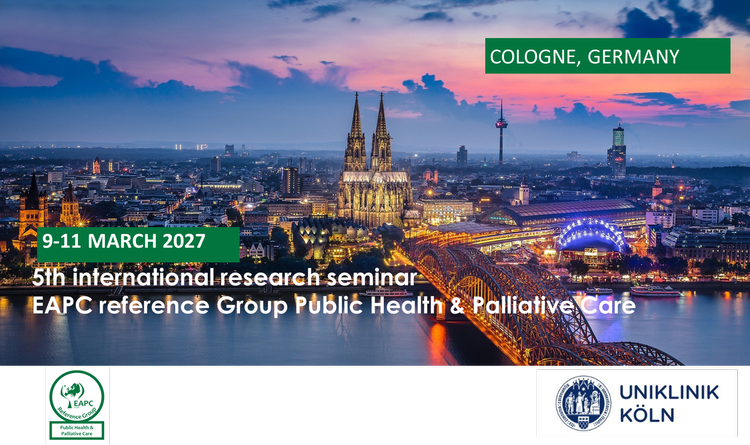
5th International Research Seminar on Public Health and Palliative CareThe 5th International Research Seminar on Public Health and Palliative Care will be hosted by Raymond Voltz’s team at the University of Cologne, Germany in 2027. More information will follow soon. For now, save the date! March 9-11, 2027.
|
|
___________________________________________________________ PHPC Tools and Resources Updates
|
Development and Management of Networks of Care at the End of Life (the REDCUIDA Intervention): Protocol for a Nonrandomized Controlled TrialBy Librada, Silvia and colleagues, published in JMIR Research Protocols. REDCUIDA intervention is a community-based palliative care model developed in Spain. The project aims to improve end-of-life care by strengthening patients’ and families’ social support networks, not just relying on formal healthcare services. The intervention is based on the concept of “Compassionate Communities” — communities where neighbors, relatives, volunteers, and local organizations actively support people with advanced illness or at the end of life. A trained community promoter would: Identify unmet patient and family needs Map available community resources Activate social/community support networks Help reduce caregiver burden and healthcare utilization
The use of the REDCUIDA protocol in a community-based intervention program enables the expansion of care networks that address patient´s needs and improves quality of life, improves patient/family satisfaction, reduces the burden on primary caregivers, enhances the likelihood of receiving care and dying in the preferred place, and reduces the use of healthcare and social care resources during the end-of-life care. For more information about the REDCUIDA Intervention: https://www.researchprotocols.org/2018/10/e10515/
|
|
___________________________________________________________ Palliative Care & Social Practice: Special Collection on Death LiteracyThe Special Collection on Death Literacy submissions have now officially closed and the first papers are being published on the landing page. There are currently four papers available: Smith KA, Blanchard P, Law S, Stajduhar K. Translating palliative care narratives into art: An arts-based knowledge translation pilot with young adult artists. https://doi.org/10.1177/26323524261423586
Holland-Hart D, Rogerson J, Edwards M. Death literacy: A document analysis review of the United Kingdom’s four countries’ policies. https://doi.org/10.1177/26323524251408431
Ito K, Tsuda S, Shimizu K, Iwakiri R, Nakajima G, Hida A, Furuta K. Advance care planning in Japan: Gaps between policy, ethical understanding, and its translation into clinical practice. https://doi.org/10.1177/26323524251413285
Rogerson J, Holland-Hart D, Edwards M. Death Literacy: Tensions between theory and practice. https://doi.org/10.1177/26323524261429985
Many more papers are on their way and we are incredibly excited for you to discover them, so watch this space!
|
|
___________________________________________________________ Children’s Palliative Care and Public HealthThe Children’s Palliative Care Education and Training (UK and Ireland) Action Group has developed a comprehensive education framework to strengthen children’s palliative care across settings. The framework outlines four levels of learning—Public Health, Universal, Core, and Specialist—emphasizing that palliative care education should extend beyond specialist services to build capability across the wider health, social care, and community workforce. A self-audit tool has also been developed to support organisations in assessing and strengthening their education pathways and workforce readiness. Alongside the framework, the group has published a position statement on children’s palliative care and public health, highlighting the importance of population-based approaches to improving access, equity, and community engagement in care. Position Statement on Children’s Palliative Care and Public Health Building on this, their recent textbook Children’s Palliative Nursing Care maps its content to the Public Health approach, reinforcing the integration of palliative care principles across levels of practice and education. Children’s Palliative Nursing Care (Routledge) The education framework and self-audit tool can be accessed here: CPCET Education Standard Framework and Self-Audit Tool
|
|
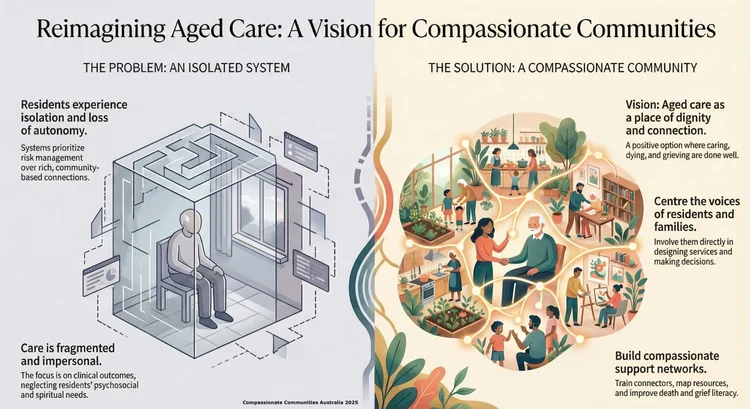
___________________________________________________________ Advocacy in Aged CareCompassionate Communities Australia continues to advance a national, community led approach to care, recognising caregiving, dying and grieving as social experiences with a small clinical component. In 2026, their Aged Care Advocacy Campaign focuses on shifting the aged care culture from transactional to relational care - restoring dignity, connection and community within residential aged care. Insights from their national panel and sector engagement highlight practical pathways, including intergenerational programs, community connectors, and culturally safe, co-designed approaches. Evidence from their Compassionate Connector model demonstrates improved wellbeing, reduced loneliness, and significant reductions in healthcare usage and health system savings. They also draw on emerging evidence, including this paper on reimagining aged care. The editorial on Demystifying Compassionate Communities clarifies the misconceptions and calls for healthcare professionals, policymakers, funders and community members to unite beyond traditional boundaries to transform how societies support anyone experiencing caregiving, dying and grieving. The opportunity now is collective - embedding relational, community enabled care as a core expectation of aged care systems, not an alternative, but the standard.
|
|
___________________________________________________________ Compassionate Communities in Action: Global Stories of Care, Loss and ConnectionDemonstrating public health palliative care in practice, this book is an essential read for people working in the field of palliative and end‑of‑life care, as well as academics, students, and policymakers. The book features twenty places including villages, cities, regions, and whole countries sharing their experience of compassionate communities, compassionate cities, and public health palliative care approaches. In addition, it features some useful tools that are supporting communities and organisations taking this work forward. Find out more here.https://www.routledge.com/Compassionate-Communities-in-Action-Global-Stories-of-Care-Loss-and-Connection/Hodges-Patel/p/book/9781041029014
|
|
___________________________________________________________ EAPC White Paper on the future research priorities in Public Health Palliative CareThis newly published Delphi study emphasises (1) representation and inclusion, (2) access to palliative care and equity in health and wellbeing outcomes, (3) impact of critical knowledge, skills and social networks and (4) methodological development in the field as key research priorities for Public Health Palliative Care. Read the paper here: https://journals.sagepub.com/doi/10.1177/02692163261418440
|
|
___________________________________________________________ Are we getting bereavement support right? This recorded international webinar offers a timely reflection on the Public Health Model of Bereavement Support, first introduced in 2012, and how it has been interpreted and applied in practice. The discussion explores whether the model has been implemented as originally intended, while also examining emerging tensions related to the increasing psychologisation and professionalisation of bereavement support. It raises important questions about how well current approaches meet the needs of bereaved families and how bereavement support might continue to evolve within a public health framework. Organised by Compassionate Communities Australia, the webinar features a panel discussion with Professor Julian Abel, Ms Orla Keegan, Associate Professor Lee Geok Ling, and Dr Ng Yong Hao, chaired by Professor Samar Aoun AM. The conversation provides practical and reflective insights for those engaged in bereavement care, public health palliative care, and community-based support approaches. You can access the webinar here.
|
|
___________________________________________________________ Editor's picks!
|
Recent publications from the Sage Journal: Palliative Care and Social PracticeVerma V, Rao KS, Ghoshal A, Bhat K V, D H, Sanian A, Mishra A, Sakpal A, Bagalkote M, Sravani B, Iyengar A, Mudaliar S, Palat G, Dinand V, Salins N. Assessing the palliative care needs of children with cancer and their families in tertiary care centres in India: A multicentre observational study. Palliat Care Soc Pract. 2026 May 19;20:26323524261430380. doi: 10.1177/26323524261430380. https://journals.sagepub.com/doi/epub/10.1177/26323524261430380 Nascimento JS, Trotte LAC, de Oliveira LC, da Rosa Mesquita MG, Garcia Moreira V, Silva AE, Cezar Diniz B, Arruda Coelho G, Correa Ferreira AP, Crispino T, de Sousa Murta M, Carvalho de Queiroz Mello F. Prontuário Compassivo: Development and initial assessment of a palliative care digital platform in socially vulnerable contexts. Palliat Care Soc Pract. 2026 May 15;20:26323524261445577. doi: 10.1177/26323524261445577. https://journals.sagepub.com/doi/epub/10.1177/26323524261445577 Harrop E, Abbott Z, Hopewell-Kelly N, Goss S, Byrne C, Bayliss J, Jones K, Clabburn O, Warren R, Penny A, Leadbitter H. 'I'm tired of justifying why my life has stopped': A qualitative analysis of the experiences and support needs of young people caring at the end of life and into bereavement. Palliat Care Soc Pract. 2026 May 12;20:26323524261442209. doi: 10.1177/26323524261442209. https://journals.sagepub.com/doi/epub/10.1177/26323524261442209 Lakhani A, Rowley G, Dsouza F, Noonan K, Eliott J. Strengthening death literacy in multicultural communities: Community-led interventions and cross-cultural validation of the Death Literacy Index. Palliat Care Soc Pract. 2026 Apr 26;20:26323524261418687. doi: 10.1177/26323524261418687. https://journals.sagepub.com/doi/epub/10.1177/26323524261418687 Dehpour T, Wakefield D, Luckett T, Hussain J, Koffman J. Patient-centred educational interventions for assessing and managing cancer-related pain relevant to minority ethnic populations: A mixed-methods systematic review. Palliat Care Soc Pract. 2026 Mar 19;20:26323524261421936. doi: 10.1177/26323524261421936. https://journals.sagepub.com/doi/epub/10.1177/26323524261421936
|
|
___________________________________________________________ From PHPCI Council
|
|
On behalf of the PHPCI council, we extend good wishes for the coming months, and we look forward to working in partnership with you over the year ahead. Full members President - Prof Luc Deliens (Belgium) Vice President - Dr Kerrie Noonan (Australia) General Secretary - Dr Bert Quintiens (Belgium) Treasurer - Dr Emma Hodges (UK) Membership Secretary - Saif Mohammed (India) Communications - Elizabeth Johnson (USA) General Member - Dr Esther Nafula (Kenya) General Member - Dr Max Kleijbergy (Sweden) General Member - Farah Demachkieh (Lebanon) General Member - Associate Professor Jason Mills (Australia) General Member - Dr. Louise D’Eer (Belgium) General Member - Prof Samar Aoun (Australia) General Member - Dr Tania Pastrana (Columbia / Germany)
Co-opted Ex officio members Journal Representative - A/Prof Libby Sallnow EAPC PHPC Representative - Dr Steven Vanderstichelen IAHPC Representative - Dr Natalie Greaves WHPCA Representative - Dr Stephen Connor Conference Representative - Prof Yingwei Wang (Taiwan)
_________________________________________________________________ Social mediaFor questions and inquiries please visit our PHPCI website, by clicking here. For Facebook - click here For Bluesky - click here For Linkedin - click here _________________________________________________________________ Would you like to contribute to the PHPCI Newsletter?We would love to hear about your Public Health Palliative Care Project! Please send your experiences, stories, events or resources to be included in forthcoming Newsletters to Elizabeth Johnson at elizabeth@thepeacefulpresenceproject.org We are also looking for regional partners to act as co-editors in assisting us in identifying and sourcing stories of public health palliative care initiatives that can be shared and celebrated in this newsletter. If you would like to take on this role, please get in touch with Elizabeth Johnson, using the email address above. _______________________________________________________________ Editorial TeamElizabeth Johnson and Farah Demachkieh extend their gratitude to the PHPCI Council for their support in the development of this newsletter. We are also pleased to welcome Silvia Librada Flores to the editorial team, and deeply appreciate her vital contributions to the June 2026 newsletter. Finally, thank you to all contributors for generously sharing your resources, ideas, and examples of practice. _________________________________________________________________
|
|
|
|