|
PHPCI Newsletter December 2025 ͏ ͏ ͏ ͏ ͏ ͏ ͏ ͏ ͏ ͏ ͏ ͏ ͏ ͏ ͏ ͏ ͏ ͏ ͏ ͏ ͏ ͏ ͏ ͏ ͏ ͏ ͏ ͏ ͏ ͏ ͏ ͏ ͏ ͏ ͏ ͏ ͏ ͏ ͏ ͏ ͏ ͏ ͏ ͏ ͏ ͏ ͏ ͏ ͏ ͏ ͏ ͏ ͏ ͏ ͏ ͏ ͏ ͏ ͏ ͏ ͏ ͏ ͏ ͏ ͏ ͏ ͏ ͏ ͏ ͏ ͏ ͏ ͏ ͏ ͏ ͏ ͏ ͏ ͏ ͏ ͏ ͏ ͏ ͏ ͏ ͏ ͏ ͏ ͏ ͏ ͏ ͏ ͏ ͏ ͏ ͏ ͏ ͏ ͏ ͏ ͏ ͏ ͏ ͏ ͏ ͏ ͏ ͏ ͏ ͏ ͏ ͏ ͏ ͏ ͏ ͏ ͏ ͏ ͏ ͏ ͏ ͏ ͏ ͏ ͏ ͏ ͏ ͏ ͏ ͏ ͏ ͏ ͏ ͏ ͏ ͏ ͏ ͏ ͏ ͏ ͏ ͏ ͏ ͏ ͏ ͏ ͏ ͏ ͏ ͏ ͏ ͏ ͏ ͏ ͏ ͏ ͏ ͏ ͏ ͏ ͏ ͏ ͏ ͏ ͏ ͏ ͏ ͏ ͏ ͏ ͏ ͏ ͏ ͏ ͏ ͏ ͏ ͏ ͏ ͏ ͏ ͏ ͏ ͏ ͏ ͏ ͏ ͏ ͏ ͏ ͏ ͏ ͏ ͏ ͏ ͏ ͏ ͏ ͏ ͏ ͏ ͏ ͏ ͏ ͏ ͏ ͏ ͏ ͏ ͏ ͏ ͏ ͏ ͏ ͏ ͏ ͏ ͏ ͏ ͏ ͏ ͏ ͏ ͏ ͏ ͏ ͏ ͏ ͏ ͏ ͏ ͏ ͏ ͏ ͏ ͏ ͏ ͏ ͏ ͏ ͏ ͏ ͏ ͏ ͏ ͏ ͏ ͏ ͏ ͏ ͏ ͏ ͏ ͏ ͏
|
____________________________________________________________ PHPCI Newsletter | Issue 12 | December 2025
|
___________________________PHPCI NEWS
|
FROM THE PRESIDENT Over the past ten years, an enormous amount of work has been done in public health palliative care. Compassionate communities have received greatly increased attention, partly due to the limitations of our conventional social care and healthcare services. Public health palliative care has become a global movement, as evidenced by recent reviews showing the worldwide growth of compassionate communities. The success of compassionate communities is also a consequence of the inaccessibility and capacity problems within existing palliative care services. Evidence shows that these services are accessed by people in need too little and too late. Palliative care services continue to be deployed far too late, and many people with palliative needs still do not have access to specialised services. A worldwide review has shown that the median uptake of palliative care is only 18 days before death; the reality, therefore, is largely “terminal care,” and early or timely palliative care remains far from being implemented. This has major consequences for public perceptions of palliative care: when palliative care professionals become involved, death is often perceived as imminent. This partly explains why palliative care remains a taboo in many societies. I believe that only a proper public health approach to palliative care can correct this perception. In turn, specialised services can also benefit significantly from the outcomes of such an approach. One of the fundamental challenges faced by palliative care is the lack of understanding that dying is a social experience with a medical component—not a medical experience with a social component. However, in the policy frameworks of many countries, palliative care is treated as a medical issue rather than a social one. Most policies have developed and implemented medical models of palliative care while neglecting the community-based caregiving resources that were an integral part of daily life some 50 years ago. At that time, many people lived in naturally occurring caring communities—villages, extended multigenerational farm households, or small towns where people were closely connected and shared many of life’s experiences, including death, dying, and loss. Public health palliative care has many pioneers around the world who are doing groundbreaking work. Their efforts have enabled the field to develop into a well-established social movement with great potential: a field of practice in community development and a fully fledged scientific domain. However, the work is far from finished. Public health palliative care will only gain full acceptance in society if it is more firmly supported by policy, legislation, logistical resources, training, education, and other structural frameworks across all domains and policy levels. In the context of the global expansion of public health palliative care, I would like to share some exciting developments from recent months. Several organisations in the German-speaking regions of Europe (Austria, Switzerland, and Germany) have joined forces to form an international collaborative on compassionate communities for their region. On 3–4 November 2025, they held their first conference in Cologne. The city of Cologne in Germany and the city of Bern in Switzerland have already committed to the Compassionate Community City Charter, and similar initiatives have emerged in Austria. The collaborative intends to share expertise and knowledge and to develop local, regional, and national strategies to promote compassionate communities across the three countries. I was also invited to speak at a plenary session during the 8th APCA conference (23–26 September 2025) of the African Palliative Care Association (APCA) in Botswana. My presentation, “Compassionate Communities in Palliative Care: Bridging the Gap,” generated a great deal of interest and I attended several sessions on PHPC related themes. Hence, also in Africa the movement is starting to get more and more support. I am fully convinced that our movement can benefit enormously from collaborating with Africa, where community approaches have traditionally been much stronger than in Europe or North America. All of my best wishes, Prof Luc Deliens
President of Public Health Palliative Care International
|
|
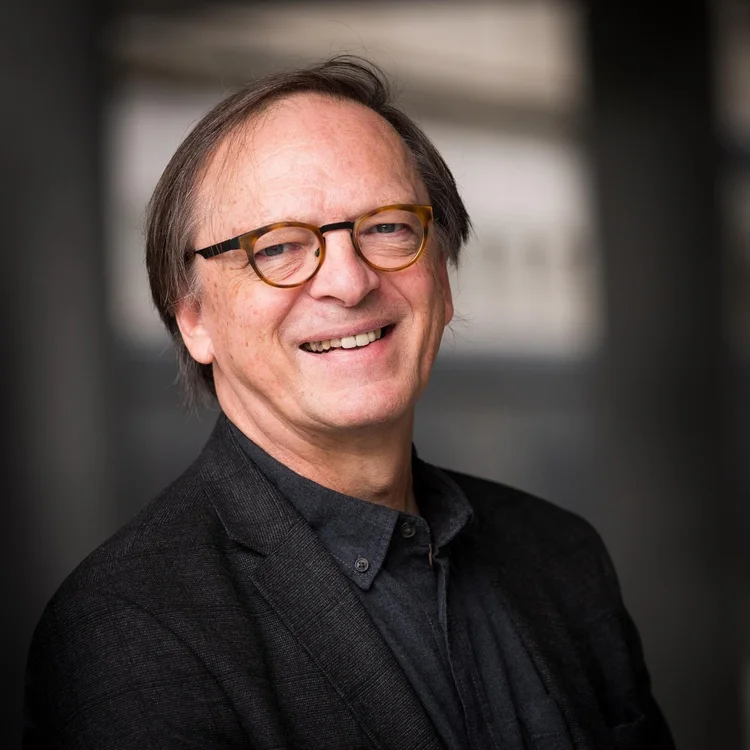
Prof Luc Deliens MA PhD President of Public Health Palliative Care International |
|
|
|
|
|
___________________________________________________________ PHPCI Compassionate Community and City EndorsementThe South West Compassionate Communities Network (Australia), Oasis of Hope in Kericho County (Kenya), Getxo Zureki (Spain), the City of Turin (Piedmont of region of Italy) and Compassionate Communities (Singapore) are the first five applicants to receive Compassionate Community endorsement through PHPCI’s new global scheme. Each group presented their community initiatives, engagement strategies and impact to an international PHPCI review panel, demonstrating a strong understanding of public health palliative care and compassionate communities in action. Full profiles about each endorsement will be available on the PHPCI website in early 2026. Endorsement is valid for five years and includes use of the official Compassionate Community logo. PHPCI leadership expressed enthusiasm and gratitude for the inspiring work taking place around the world to improve experiences of death, dying, caregiving and loss. Dr Emma Hodges who is Treasurer at PHPCI and leading the endorsement programme said “We are pleased to have started this endorsement programme which we will be continually reviewing. It was wonderful to hear some of the fantastic work happening globally to improve experiences relating to death, dying, loss and caregiving and celebrate these achievements with the endorsed compassionate community status.” Guidance materials and webinars to support future applicants will be released soon, with additional review panels already underway. For more information about the Compassionate Communities and Cities Endorsement process, visit our website here: https://www.phpci.org/ccendorsement
|
|
___________________________________________________________ New PHPC ToolsThe Scottish Partnership for Palliative Care has produced a powerful 4-minute film that distills the essence of public health palliative care. Through a mix of uplifting imagery, it explains how community engagement, social support, and compassionate care can transform our experience of serious illness, dying, and grief. We highly recommend watching—it’s a meaningful way to introduce PHPCI’s mission to friends, partners, or policymakers. Watch the video here: https://vimeo.com/1135830580?share=copy&fl=sv&fe=ci
|
___________________________Around the World
|
Global Momentum in Public Health Palliative Care: Reflections from the Victoria Research SeminarBy Luc Deliens President, Public Health Palliative Care International Professor of Palliative Care Research VUB university Brussels Past attendance records were broken at the 4th International Seminar on Public Health Palliative Care Research, held June 18–19, 2025, in Victoria, BC, Canada. More than 150 people attended. The University of Victoria (UVic) generously offered its venue at no cost, helping keep registration fees low and increasing accessibility for participants. The seminar was organized by the European Association for Palliative Care (EAPC) Reference Group on Public Health Palliative Care. This biennial seminar alternates with Public Health Palliative Care International’s (PHPCI) world conference, next scheduled for October 6–9, 2026, in Taipei, Taiwan. This was the first time the EAPC seminar was held outside Europe. The 2025 theme, “Innovating Care: Research and Action for Public Health and Palliative Care,” set the tone for two days of rich dialogue. The seminar opened with a powerful and moving Indigenous Welcome by Elder Dr. Skip Dick in UVic’s First Peoples House. Acknowledging the First Peoples on whose territory gatherings take place—and honoring their historical relationship with the land—is a practice that all conferences should consider. The wealth of every nation is built upon generations who lived on these lands, and their experiences must not be forgotten in academic and policy spaces. The academic welcome was offered by Dr. Lisa Kalynchuk, UVic Vice President of Research & Innovation. The seminar program was introduced by scientific committee co-chairs Prof. Kelli Stajduhar (UVic) and Prof. Hsien Seow (McMaster University). Equity in access to palliative care emerged as the dominant theme. Public health approaches are urgently needed to address the many injustices embedded in health systems. More research is required to understand the living and dying conditions of underserved communities—including people experiencing homelessness, refugees, LGBTQ+ communities, and others. Targeted community-based palliative care approaches are essential to addressing these disparities. The development of culturally safe and culturally sensitive practices must also receive much more focus in palliative care research and practice. Medical Assistance in Dying (MAID), legalized in Canada nearly ten years ago, was another major topic—especially given that Vancouver Island has the highest rate of MAID in the country. Presenters and participants engaged in thoughtful, respectful, and non-polarized dialogue about MAID and the challenges of integrating it into mainstream healthcare and palliative care. A public health approach is clearly needed here as well. Before the seminar, a pre-conference leadership policy meeting brought together about 40 Canadian leaders from healthcare, palliative care, public health, municipal and provincial government, and academia. A lecture on public health palliative care sparked significant engagement and lively discussion. University of Victoria Deputy Provost Helga Hallgrimsdottir expressed strong interest in the concept and practice of a “compassionate university.” Linking such policy meetings to major conferences can be highly effective, offering a model for mobilizing policymakers and practitioners at multiple levels—one that could be replicated more widely in palliative care globally. Abstracts from the seminar will be published in the PHPCI-endorsed SAGE journal Palliative Care & Social Practice. PHPCI is proud to support these seminars, and several members presented throughout the program. Keynote lectures included:
• “Bringing Death Back into Life: The Lancet Commission on the Value of Death” – Libby Sallnow (University College London, UK)
• “Relationships and Power: Lessons about Cross-Sector Collaboration and Community Engagement from an English Coastal Town” – Lucy Selman (University of Bristol, UK)
• “Creating Spaces to Honour Indigenous Knowledge in Palliative Care: Addressing the Need for Culturally Safer Care for Indigenous Peoples” – Holly Prince (Lakehead University, Ontario, Canada)
• “Public Health Palliative Care for Track 2 MAID: The Irony of Eleventh-Hour Approaches” – Barbara Pesut (University of British Columbia, Canada) ___________________________________________________________
|
Stories from SANAD: A New Narrative Project on Hospice and Palliative CareSANAD – The Home Hospice Organization of Lebanon – has launched Stories from SANAD, a powerful new narrative series highlighting meaningful moments and insights from their home hospice work. The project aims to deepen public understanding of palliative and hospice care in Lebanon and across the region. The short, cinematic films are inspired by real cases, with identities protected and full consent obtained. Designed for a broad audience—including caregivers, students, and community members—they explore themes central to SANAD’s mission, such as truth-telling, dignity, personhood, legacy, spiritual support, death anxiety, and grief. Through these stories, SANAD invites viewers to reflect on illness, humanity, and the final chapter of life. To continue the conversation, the team will engage audiences across social media platforms—inviting questions, comments, and community interaction. As with their wider awareness-raising efforts, SANAD will use this feedback to refine future educational materials and identify community needs. (YouTube, TikTok, Instagram, Facebook, X)
|
|
___________________________________________________________ Fellowship in Compassionate Spaces – A Shared Learning ExperimentReflections from Parvathy P, Course Coordinator What does a compassionate community look like? Is it a hospital where care is not rushed, a city where no one is discriminated against, a classroom that protects dignity and nurtures learning, or a digital space that safeguards our humanity? And who is responsible for nurturing such a world - is it professionals and policymakers? Philanthropists, or perhaps all of us, together? At the Institute of Palliative Medicine, these questions have been at the heart of our explorations and our recent conversations with the Indian Institute of Architects led to the Fellowship in Compassionate Spaces. The fellowship begins with a simple yet deep conviction: compassion is not confined to caregiving, but belongs to many disciplines. Our journey began with foundational philosophies, histories, and socio-cultural expressions of compassion. We then moved into explorations of space in its many dimensions, before speculating about the numerous ways compassionate spaces can be designed. Towards the end, we ventured into intersections and frontiers, and closed on a hopeful note with stories from the ground and collection of insights from our cohort. Overall, the course moves from theory to practice - critically examining, applying, and envisioning compassion across spaces, both physical and intangible. What has made this journey remarkable is not only the breadth of themes but the spirit of conversation it has nurtured. Far from being a lecture series, the fellowship has become an evolving dialogue. Participants bring their own stories and insights, reshaping the themes as they unfold.
|
|
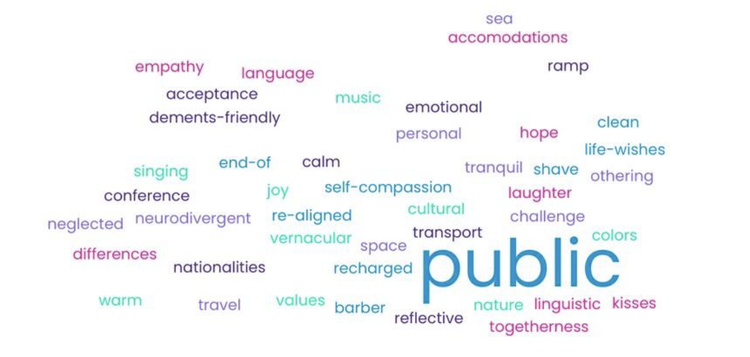
Figure 1: Word cloud generated from our discussions about inclusive and resilient spaces. Here’s the link to the padlet board with the participant’s entries: https://padlet.com/Fellowship/inclusive-space-resilient-space-ots2zcat1us49o5n
The pilot drew more than a hundred applications, with forty-five participants and ten observers selected from sixteen countries. As our participant Suchithra reflected, “ I joined the Compassionate Spaces course last minute, initially feeling apprehensive about fitting in, catching up, and contributing. However, from the very first session, my doubts began to fade. The space held a quiet warmth and a strong sense of unconditional welcome. The conversations were thoughtful, reflections deep, and the listening genuine. I soon found myself eagerly anticipating Wednesdays. Those few hours became a vital space to slow down, reflect, and be part of something kind and honest. This was more than a course; it felt like a shared journey into creating spaces of care, trust, and understanding.”
Through six months and nearly 70 sessions, the fellowship has grown into a community - diverse and united by a shared hope that compassion is not an ideal too fragile for the world, but a force that can reimagine it. We hope to continue this journey annually - announcements for the next cohort will be released in March 2026.
|
|
_________________________________________________________________
|
Compassion and Social Justice: UWC’s Vision for a Transformative University CultureOn September 24, the Compassionate Communities Centre of Expertise (COCO) at VUB hosted Professor Anita Padmanabhanunni, Dean of Community and Health Sciences at the University of the Western Cape (UWC), to discuss making UWC Africa’s first Compassionate University. Drawing on VUB’s work, the lecture explored how UWC’s history of social justice, activism, and resilience can inform a compassionate academic culture. Professor Padmanabhanunni highlighted UWC’s transformation from an institution shaped by apartheid to a leader in inclusion and care, linking compassion to inequality, social justice, and well-being. While COCO focuses on serious illness, death, and caregiving, UWC situates compassion within broader social justice challenges, including housing, food security, and mental health, exemplified by its annual Mental Health Week. The lecture reinforced the ongoing UWC–VUB collaboration, emphasizing that the Compassionate Communities model must be adapted to local cultural, social, and economic contexts.
|
|
___________________________________________________________ Compassionate Communities Australia: National Momentum for Community-Led CareCCAus is a national, cross-sector organisation with a wide focus on community-led wellbeing across life-limiting illness, ageing, caring, dying, and grieving. It aligns with the principles of public health palliative care. Compassionate Communities Australia (CCAus), hosted two major national events in late 2025: the inaugural National Forum in Brisbane and an online panel on Reimagining Residential Aged Care. Both gatherings highlighted a growing national movement to embed compassionate, relational, community-driven approaches across health, aged care, social services, and local government. At the Brisbane Forum (9 September), 160 participants from across sectors explored how systems and communities can work together to strengthen connection, participation, and relational care. Attendees co-developed Advocacy Statements to support conversations with decision makers and emphasised the need for compassionate community approaches to become long-term, community-led frameworks rather than temporary projects.
Forum overview video: https://youtu.be/Tot7-Z3DiEg?si=hL6v8lwndp5VvHys On 12 November, CCAus hosted a national online panel on the future of residential aged care, highlighting the need to care “about” older people, not just care “for” them. Speakers from general practice, First Nations communities, aged care, policy, and community organisations discussed practical strategies including embedding compassionate community principles, strengthening partnerships, promoting intergenerational care, and building grief and death literacy for staff, residents, and families.
Panel recording: https://youtu.be/2x_23-aUEpY Insights from both events feed into CCAus’ national advocacy agenda, which spans aged care, health, education, workplaces, local government, and palliative care. Sector-specific advocacy statements are now being developed to support policy, workforce, and community action: https://compassionatecommunities.au/advocacy-action/ Demystifying Compassionate Communities: New Editorial in Palliative Care and Social Practice A newly published editorial addresses common misconceptions about the Compassionate Communities approach. Rather than a new healthcare model or a replacement for palliative care, Compassionate Communities strengthen and connect the many informal and formal supports already surrounding people—families, neighbours, community groups, volunteers, and health and social care services. This approach recognises that most care occurs outside clinical settings and calls for systems and communities to work together to improve caregiving, dying, and grieving.
Editorial link: https://doi.org/10.1177/26323524251396992
|
|
___________________________________________________________ Upcoming Events & Opportunities
|
PHPCI International ConferenceWe are pleased to announce that the 9th PHPCI Conference will be held October 6–9, 2026, in New Taipei, Taiwan.
Mark your calendars—registration information and programme updates will be shared in the coming months.
|
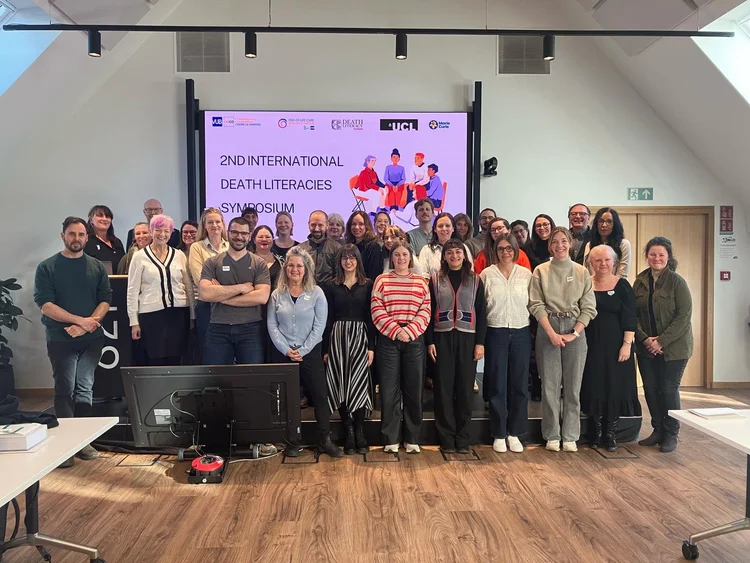
________________________________________________3rd International Death Literacies SymposiumThe 3rd international Death Literacies symposium is being held in Breda in the Netherlands from March 9-10, 2026. The Death Literacies Symposium is organised by the International Death Literacies Network. The network aims to unite individuals working on Death and End of Life literacy, learn from ongoing projects, inspire each other and collaborate in projects together. All information about the symposium, including registration details, can be found HERE:
https://www.deathliteracy.institute/3rd-dl-symposium
|
|
___________________________________________________________ PHPC Tools and Resources Updates
|
|
___________________________________________________________ Research Handbook on End of Life Care and SocietySuffering related to serious illness, caregiving, dying, and loss is a complex phenomena requiring perspectives from multiple disciplines. The Research Handbook on End-of-life Care and Society, edited by David Clark and Annemarie Samuels, meets this need. Rooted in social sciences and humanities, the handbook recentres such complex experiences around society while highlighting innovations and challenges in end-of-life research. With 34 chapters by 60 contributors from 20 countries, it covers topics ranging from public engagement to place of death, displacement, sociocultural diversity, cultural communication, assisted dying among others. It also features a chapter on Compassionate Communities by PHPCI council members Bert Quintiens and Steven Vanderstichelen. The handbook is available in open access. Link provided HERE: https://www.e-elgar.com/shop/gbp/research-handbook-on-end-of-life-care-and-society-9781035317332.html
|
|
___________________________________________________________ New Resources to Support Palliative Care Integration and Universal Health CoverageAn IAHPC Delphi study involving 180 experts across all WHO regions has culminated in the Essential and Expanded Palliative Care Packages for Adults and Children, a resource for healthcare providers and advocates in countries of all income levels. The Essential Packages, designed to be low-cost, list the medicines, equipment, and personnel necessary to reduce serious health-related suffering of people with life-limiting conditions and those at the end of life. The Expanded Packages are suited for settings where complex and specialized needs arise and where more resources are available. The packages are the first work stream of the Global Access to Palliative Care in Latin America (GAP - LA) Project, an international initiative that aims to strengthen health systems and foster universal health coverage (UHC). The packages build on the 2018 Lancet Commission on Global Access to Palliative Care and Pain Essential Package for Palliative Care and Pain Relief. The packages can be read and downloaded from these links: Additionally, the IAHPC recently finalized a Manual on the Use of Essential Medicines for Palliative Care for Adults, developed with extensive input from 57 palliative care workers and 23 palliative care experts from 45 different countries in all income levels. The Manual is a component in the agreement of work between the IAHPC and the WHO in its capacity as a Civil Society Organization in official relations with the WHO. The Manual provides recommendations on the use of the essential palliative care medicines included in the WHO Essential Medicines List and in the Essential Package, to support health professionals providing generalist or primary palliative care. It is organized by symptom, and for each recommended medicine, offers consensus-based recommendations, including starting dose, maximum daily dose, and frequency of dosing, as well as additional recommendations proposed by individual experts. IAHPC's Pallimedicines is a new tool to give practitioners swift access to precise information on essential medicines, contained in the Manual on the Use of Essential Palliative Care Medicines for Adults, for 15 common symptoms related to palliative care. Searchable by symptom, the resource details starting dose; dosing frequency, increases, and reductions; maximum daily dose; precautions; and experts' comments.
(1) Pastrana T, De Lima L, Portenoy R, Dudgeon D, Voeuk A, Ahmed E, Radbruch L. IAHPC Manual on the Use of Essential Medicines for Palliative Care. Houston: IAHPC Press; 2025.
|
|
___________________________________________________________ Editor's picks!
|
Recent publications from the Sage Journal: Palliative Care and Social PracticeBjörk, J. (2025). Ethical reflection: The palliative care ethos and patients who refuse information. Palliative Care and Social Practice. https://doi.org/10.1177/26323524251355287 Mollison, A., Stajduhar, K. I., Gagnon, M., & McNeil, R. (2025). A critical examination of ‘family’ caregiving at the end of life in contexts of homelessness: Key concepts and future considerations. Palliative Care and Social Practice. https://doi.org/10.1177/26323524251336765 Dismore, L., Frew, K., Wakefield, D., Bryan, C., & Swainston, K. (2025). Remote and rural communities face inequalities in access to specialist palliative care: Could telemedicine enhance care? A qualitative study of patient, carer and healthcare professionals’ experiences of video consultation. Palliative Care and Social Practice. https://doi.org/10.1177/26323524251380632 Archer, M., Willmott, L., Chambaere, K., Deliens, L., & White, B. P. (2025). Key challenges in providing assisted dying in Belgium: A qualitative analysis of health professionals’ experiences. Palliative Care and Social Practice. https://doi.org/10.1177/26323524251318044 Nabirye, A. K., Munabi, I. G., Mubuuke, A. G., & Kiguli, S. (2025). Perceptions and attitudes of nursing students toward end-of-life care: A qualitative study at a tertiary hospital in Uganda. Palliative Care and Social Practice. https://doi.org/10.1177/26323524251383085
|
|
___________________________________________________________ From PHPCI Council
|
|
On behalf of the PHPCI council, we extend good wishes for the coming months, and we look forward to working in partnership with you over the year ahead. Full members President - Prof Luc Deliens (Belgium) Vice President - Dr Kerrie Noonan (Australia) General Secretary - Dr Bert Quintiens (Belgium) Treasurer - Dr Emma Hodges (UK) Membership Secretary - Saif Mohammed (India) General Member - Elizabeth Johnson (USA) General Member - Dr Esther Nafula (Kenya) General Member - Dr Max Kleijbergy (Sweden) General Member - Farah Demachkieh (Lebanon) General Member - Associate Professor Jason Mills (Australia) General Member - Dr. Louise D’Eer (Belgium) General Member - Prof Samar Aoun (Australia) General Member - Dr Tania Pastrana (Columbia / Germany)
Co-opted Ex officio members Journal Representative - A/Prof Libby Sallnow EAPC PHPC Representative - Dr Steven Vanderstichelen IAHPC Representative - Dr Natalie Greaves WHPCA Representative - Dr Stephen Connor Conference Representative - Prof Yingwei Wang (Taiwan)
_________________________________________________________________ Social mediaFor questions and inquiries please visit our PHPCI website, by clicking here. For Facebook - click here For Bluesky - click here For Linkedin - click here _________________________________________________________________ Would you like to contribute to the PHPCI Newsletter?We would love to hear about your Public Health Palliative Care Project! Please send your experiences, stories, events or resources to be included in forthcoming Newsletters to Elizabeth Johnson at elizabeth@thepeacefulpresenceproject.org We are also looking for regional partners to act as co-editors in assisting us in identifying and sourcing stories of public health palliative care initiatives that can be shared and celebrated in this newsletter. If you would like to take on this role, please get in touch with Elizabeth Johnson, using the email address above. _______________________________________________________________ Editorial TeamElizabeth Johnson, Farah Demachkieh and Dr. Louise D’Eer thank the PHPCI Council for assistance with the development of this newsletter. Thank you also to all article contributors for sharing your resources, ideas and practice examples. _________________________________________________________________
|
|
|
|